Age is a clue, not a verdict
Many conventional tank water heaters last roughly eight to twelve years, but water conditions, installation quality and maintenance can change that range significantly. Some fail earlier; others serve longer. The manufacture date is helpful background, not a guarantee. Check the model label and service history, then combine that information with symptoms and a professional assessment.
Separate component problems from tank problems
A faulty control, valve or heating component can sometimes be repaired without replacing the whole unit. A tank leaking from its body is a different concern and commonly requires replacement. Moisture near a heater can also come from a connection or another nearby source. Establish where the water originates before deciding that the tank itself has failed.
Compare the complete cost
A repair estimate should be considered alongside the condition of the unit and the risk of further problems. A replacement quote should explain installation requirements, connections and any necessary venting or access changes. Avoid comparing appliance prices alone. A heater that looks inexpensive on a shelf may require changes to the installation that materially affect the total scope.
Match the heater to your household
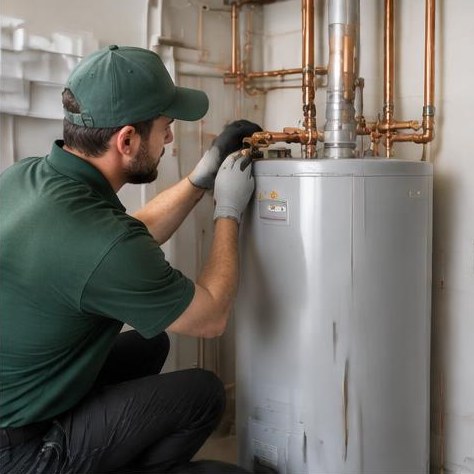
An Oakville home with multiple bathrooms may have very different hot-water needs from a smaller household. Discuss simultaneous showers, large bathtubs and peak demand. Tankless systems need careful sizing for winter inlet temperatures and may require supply or venting upgrades. The most useful option is the one that fits the actual demand and installation conditions.
Do not ignore safety warning signs
If you smell gas, leave and contact the gas emergency provider. Do not block a relief-valve discharge, work on electrical connections or attempt unfamiliar combustion repairs. A leaking unit should be assessed promptly, with the water supply isolated if safe. Ask your plumber which ongoing maintenance tasks are appropriate for your specific model and warranty guidance.
Check the model and warranty details
The label on the heater usually gives a model and serial number that helps identify age, parts and manufacturer guidance. Take a clear photo if it is safely accessible. Warranty coverage can differ between the tank and components, and labour may not be included. Do not assume that a remaining warranty means every repair is covered. Ask what documentation is needed and whether the proposed work is compatible with the manufacturer’s requirements. Installation history also matters: venting, relief-valve piping and available service space should be assessed alongside the appliance itself.
Sediment and maintenance are not universal
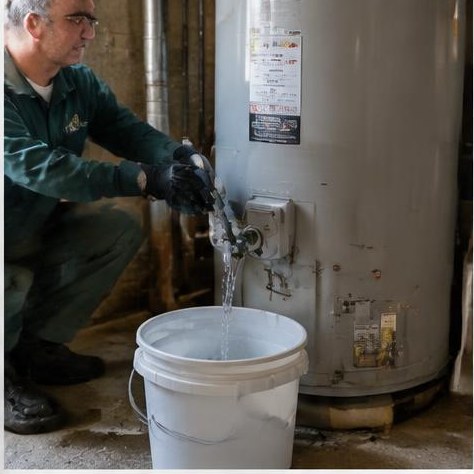
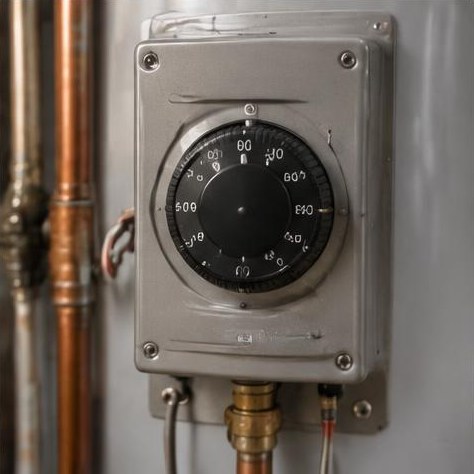
Deposits can affect tank performance and create noise, but unfamiliar maintenance work can introduce scalding, leak or equipment hazards. Follow the model’s guidance and ask whether professional service is appropriate. Tankless units may need periodic descaling depending on water conditions and manufacturer instructions. Maintenance intervals should reflect the actual equipment rather than a generic promise. If the heater has not been serviced for years, tell the plumber before attempting to drain it. Older valves and connections may require extra care, and maintenance cannot repair a structurally failed tank.
Think about timing and disruption
A planned replacement gives you more opportunity to discuss equipment options and prepare access than an emergency failure does. Ask about water interruptions, removal of the old heater and any other work needed to complete the installation. Keep the area around the unit clear, but do not disconnect anything yourself. The final handover should include operation guidance, maintenance expectations and the location of relevant shutoffs. A suitable replacement is one that can be installed correctly and maintained safely.
What to share when you call
Before arranging a visit, make a short list of the symptoms and the fixtures affected. Include when the problem began, whether it is constant or intermittent, and any changes made to the house recently. Photos of accessible areas and equipment labels can provide useful background, but they do not replace inspection. Clear access to the working area and tell us about pets or any particular concerns about finishes. Good information helps make the first conversation more focused.
A local approach to a practical decision
Oakville homes vary widely, from heritage properties near the lake to newer developments in Glen Abbey, River Oaks and Joshua Creek. That variety is why plumbing advice should be tied to the installation, not just a broad rule. Oakville Plumbing explains the observed problem, the proposed work and the pricing before you decide. If more than one approach is practical, ask about the differences in disruption, maintenance and long-term suitability. An informed decision starts with a clear scope.
Keep safety and scope in perspective
Homeowner observations are valuable, but they should never require exposure to contaminated water, electrical hazards or unfamiliar gas equipment. Stop and seek appropriate help if the situation is unsafe. Plumbing repairs may also need coordination with restoration, renovation or other trades. Clarify which work is included and which finishes or materials need separate attention. Addressing the source is the first step; checking the result and understanding any follow-up makes the solution more complete.
Your next step
If you are planning a project or investigating a persistent symptom, request a free estimate with the details of your home and the service you need. For an urgent plumbing problem, call rather than waiting for a form response. Oakville Plumbing is open 24 hours, 7 days a week, serving Oakville and discussing requests throughout nearby Burlington, Mississauga, Milton and Halton Region. We will talk through the situation and explain the next available step without treating a general article as a substitute for an on-site assessment.
A little help makes a big difference.
Questions about your home? Talk to Oakville Plumbing. For urgent plumbing problems, call (289) 802-3778.